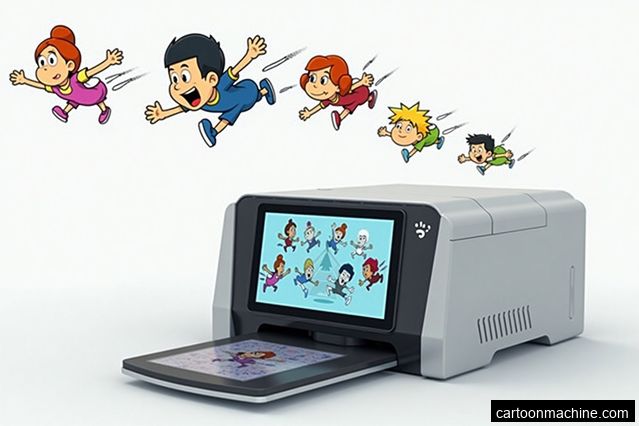
Automation in Cartoon Creation
Automation in cartoon creation refers to the use of software and algorithms to generate cartoons without the need for manual animation. This technology has significantly sped up the production process, allowing animators to create cartoons more efficiently. One notable example is Toon Boom Harmony, a software widely used in the industry. With its advanced features, artists can create animations faster and with greater precision.
For example, Toon Boom Harmony provides animators with a variety of tools and features that streamline the animation process. It offers a range of premade templates, character rigs, and special effects that can be easily customized to fit the artist's vision. This saves animators time and effort by eliminating the need to create every element from scratch. Additionally, the software's timeline and keyframe-based animation system allow for precise control over timing and movement, resulting in smoother and more polished animations.
Advantages of Automated Cartoon Creation
Automated cartoon creation offers several advantages to the traditional animation industry. Firstly, it reduces production costs by minimizing the need for a large team of animators. With automation, a single animator can achieve what previously required a team. This not only saves money but also allows for more creative control and flexibility in the production process.
One case study showcasing the advantages of automation in cartoon creation is the production of the animated series "South Park." The show's creators, Trey Parker and Matt Stone, embraced automation to simplify the animation process and meet tight deadlines. By utilizing software like Maya and After Effects, they were able to create episodes in just a few days, compared to the weeks or months it would typically take for traditional animation. This allowed them to respond quickly to current events and maintain the show's relevance.
Challenges Faced by Traditional Animators
While automation brings numerous benefits, it also poses challenges to traditional animators. One major concern is the potential loss of jobs. As automation replaces the need for manual animation, many animators fear their roles may become obsolete. However, it is important to note that automation does not completely replace the need for human creativity and expertise. Animators can still play a crucial role in shaping and enhancing the automated process.
Another challenge faced by traditional animators is the risk of a homogenization of cartoon styles. As the same software and algorithms are used by multiple artists, there is a possibility that cartoons may start to look similar, lacking diversity and uniqueness. To overcome this challenge, animators can actively experiment with different techniques and styles, adding their personal touch to the automated process. This ensures that each cartoon maintains its distinctiveness and stands out in the industry.
The Role of Traditional Animation Skills
Despite the rise of automation, traditional animation skills still hold value in the industry. While software can automate certain aspects, it cannot replicate the artistic vision and creativity of a skilled animator. Traditional animators bring a unique touch and human element to cartoons that automation alone cannot achieve.
An example of the importance of traditional animation skills can be seen in the film "Spider-Man: Into the Spider-Verse." The movie utilized a unique animation style that combined traditional hand-drawn animation with modern computer-generated techniques. The traditional animators brought their expertise in hand-drawn animation, ensuring that the characters and movements had a natural and organic feel, which added depth and emotion to the film.
The Future of Animation Industry
The impact of automated cartoon creation on the traditional animation industry is undeniable. As technology continues to advance, it is crucial for traditional animators to adapt and embrace automation as a tool rather than a threat. This can involve learning new software and techniques that complement their traditional skills.
One example of how traditional animators can adapt is by incorporating motion capture technology into their workflow. Motion capture allows animators to capture the movements of live actors and transfer them onto animated characters. By combining the realistic movements of real people with the artistic vision of traditional animators, a unique and dynamic animation style can be achieved.
Maintaining Artistic Integrity in Automation
To preserve artistic integrity, it is important for animators to actively shape the automation tools they use. By providing feedback and suggestions to software developers, animators can ensure that automation aligns with their artistic vision. Additionally, the integration of automation can free up animators' time to focus on more creative aspects of their work, such as storytelling and character design.
A notable example of maintaining artistic integrity in automation is the production of the Pixar film "Coco." While the film utilized advanced animation software, the animators worked closely with the software engineers to create a toolset that allowed them to emphasize the film's unique artistic style and cultural authenticity. This collaboration ensured that the automation technology enhanced the creative process rather than overshadowing it.